What to Bring on a Teotihuacan Tour: Packing Checklist
Quick answer
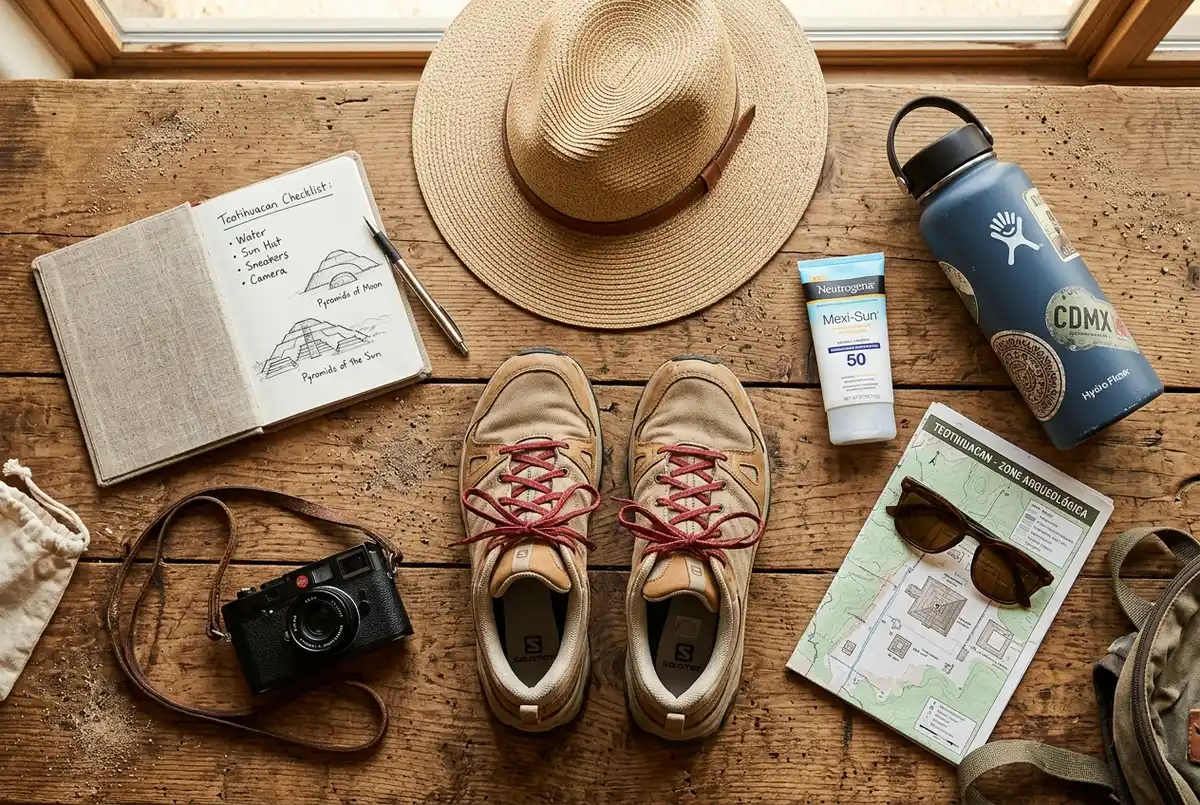
The essentials for what to bring on a teotihuacan tour are closed comfortable shoes, sunscreen, a hat, and at least a liter of water, since the site sits above 7,400 feet with almost no shade and involves real walking and stair climbing.
Knowing what to bring on a teotihuacan tour comes down to four essentials: closed comfortable shoes for climbing, sun protection for a site with almost no shade, enough water for a few hours outdoors, and light layers for a morning that starts cool and heats up fast. Teotihuacan sits above 7,400 feet in elevation, which catches many first-time visitors off guard, so this checklist covers the details a generic packing list misses.
What Footwear Should You Wear to Teotihuacan Pyramids?
Closed, sturdy shoes with good tread matter more than any other packing decision here. What to wear to Teotihuacan pyramids starts with your feet: the stone steps up the Pyramid of the Sun and Pyramid of the Moon are steep, uneven, and worn smooth in places, and the paths connecting the site’s main structures are rough, ancient stonework, not paved walkways.
Sandals, flip flops, or worn-out soles make the climb genuinely uncomfortable and increase your risk of a slip. A broken-in pair of sneakers or light hiking shoes is the right call, not stiff new boots you have never worn on a long walk.
Why Does Sun Protection Matter More Here Than You Might Expect?
Teotihuacan’s plazas and the Avenue of the Dead offer almost no natural shade, and the site’s high elevation means UV exposure is stronger than it feels, even on a mild-looking day. Sunscreen, a wide-brim hat or cap, and sunglasses are non-negotiable, especially if your tour includes a teotihuacan sunrise tour departure that stretches into the hottest part of the late morning by the time you finish walking the site.
Reapply sunscreen partway through your visit if your tour runs several hours, since a single morning application often is not enough for a full day outdoors.
How Much Water Should You Bring?
Plan for at least a liter of water per person, more if you are visiting during the hotter dry season months or climbing both pyramids. Limited water and food options exist inside the perimeter, so bringing your own from your hotel or a shop beforehand is more reliable than counting on finding a vendor exactly when you need one.
Does the Altitude Actually Affect Visitors?
Yes, more than most first-time visitors expect. Teotihuacan and greater Mexico City both sit above 7,000 feet, high enough that visitors arriving from sea level sometimes notice shortness of breath on the pyramid climbs sooner than they would at home. Pacing yourself on the stairs, taking breaks, and staying hydrated go a long way toward managing this, and it is rarely serious enough to affect a short visit if you listen to your body.
What Else Is Worth Packing?
Beyond the essentials, a small day bag makes carrying water and snacks easier, since food options inside the archaeological zone are limited. Cash in small denominations is useful for tipping a guide, buying a snack from a local vendor, or picking up a souvenir at a workshop stop. A light jacket or layer is worth having for an early morning departure that starts cool before the day heats up.
Should You Bring Cash or Cards?
Bring cash. Vendors, guides, and small workshop stops around Teotihuacan generally expect cash, and card acceptance is inconsistent outside of larger established businesses. A modest amount in small bills covers tips and casual purchases without you needing to rely on finding an ATM near the site.
Can You Bring a Backpack or Bag Inside the Site?
Yes, a small day bag is fine and genuinely useful for carrying water, sunscreen, and snacks around the site. Very large bags or luggage are impractical given the amount of walking and stair climbing involved, so leave anything bulky at your hotel or in your tour vehicle if that option is available.
Do You Need Special Gear for Climbing the Pyramids?
No specialized gear is required. The climbs are demanding stairs, not technical climbing, so what matters is footwear and physical readiness rather than equipment. Travelers with knee or mobility concerns should pace themselves and use the handrail where available, and there is no obligation to climb either pyramid to fully enjoy a visit to the site.
Does What You Bring Change Between a Guided Tour and a Self-Guided Visit?
Not much. Guided and independent visitors face the same sun, altitude, and terrain, so the core packing list stays the same either way. A guided tour simply removes some of the planning burden, transport, ticket logistics, and knowing where to go, which is one reason many first-time visitors prefer booking a full package over arranging each piece themselves.
What Should You Leave at Your Hotel?
Leave large luggage, valuables you do not need for the day, and anything fragile back at your hotel rather than bringing it along. The amount of walking and stair climbing involved makes a bulky bag more of a liability than a convenience, and most tour vehicles have limited space for anything beyond a small day bag per traveler. A photocopy or photo of your passport is usually enough identification for the day rather than carrying the original document around a dusty archaeological site.
Does Packing Change Between a Half Day and a Full Day Tour?
Only slightly. A full day itinerary that adds a second stop, like the Basilica of Guadalupe, benefits from an extra layer or light jacket if the schedule runs into cooler evening hours, and a little more cash for a second site’s souvenir stands or offerings. Otherwise the core list, shoes, sun protection, and water, covers both formats equally well, since the walking and climbing at Teotihuacan itself does not change based on how long the rest of your day runs.
Should You Pack Rain Gear or Bug Spray?
A compact travel umbrella or a light packable rain jacket is worth having during the rainy season months, roughly May through October, since afternoon showers are common even though they rarely disrupt a morning visit. Bug spray is not usually necessary at the archaeological zone itself, which is mostly open stone plazas, though it can be useful if your itinerary includes a stop at a more vegetated site like La Gruta or a countryside workshop.
Is Sunscreen Sold Near the Site If You Forget Yours?
Small shops and vendor stands near the entrance sometimes carry sunscreen and hats, but selection and price are unreliable compared to picking up what you need beforehand at a pharmacy or convenience store in Mexico City. Treat any on-site availability as a backup plan rather than your primary source, especially since demand can outpace supply on a busy day.
Is a Reusable Water Bottle Better Than Buying Bottled Water?
A reusable bottle filled before you leave your hotel is generally the more practical choice, since it saves you from relying on finding a vendor at the right moment inside the site. If you do buy bottled water locally, stick to sealed bottles from an established shop near the entrance rather than informal roadside stands, and bring small bills since change can be limited at smaller vendors.
Putting It Together Before You Go
Pack closed shoes, sunscreen, a hat, at least a liter of water, some cash, and a light layer, and you are set for almost any Teotihuacan itinerary, half day or full day, sunrise or later morning. Our broader guide to choosing the right Teotihuacan tour covers the other decisions, duration, timing, and group size, that shape the rest of your trip planning.
For more on what a typical day looks like once you arrive, our Teotihuacan visitor guide walks through site layout and timing in more detail. When you are ready to book, compare the full tour piramides de teotihuacan range to find the format that fits your trip. Teotihuacan is recognized as a UNESCO World Heritage Site, and a little preparation makes the visit considerably more comfortable.
Does Your Packing List Change With a Sunrise Departure or a Longer Full Day Itinerary?
A sunrise start means packing a light layer for the cooler pre-dawn temperature, since Teotihuacan warms quickly once the sun is up. Our sunrise and early morning tour guide covers exactly what an early departure involves if you are still deciding on timing. A longer full day itinerary simply stretches the same core list across more hours, so pack a little extra water and a snack rather than anything fundamentally different. Our half day versus full day comparison breaks down what each format actually involves if you have not settled on a duration yet.
Frequently Asked Questions
What shoes should I wear to Teotihuacan?
Closed, comfortable, broken-in shoes with good tread. The stone steps and uneven paths make sandals or worn-out soles uncomfortable and riskier for climbing.
How much water should I bring to Teotihuacan?
At least a liter per person, since the site has almost no shade and limited water vendors inside the perimeter.
Is the altitude at Teotihuacan a problem for visitors?
It can cause mild shortness of breath on the pyramid climbs for travelers arriving from sea level, though pacing yourself and staying hydrated usually manages it fine for a short visit.
Do I need cash at Teotihuacan?
Yes, cash in small denominations covers tips, snacks, and souvenirs, since card acceptance is inconsistent around the site and nearby workshop stops.
Can I bring a backpack into the archaeological zone?
Yes, a small day bag is fine and useful for water and sunscreen. Large bags or luggage are impractical given the amount of walking involved.
Ready to visit?
Book your tickets in advance: popular time slots sell out.