Teotihuacan Pyramids: History, Facts & What You'll See
Quick answer
The pyramids of Teotihuacan are the Pyramid of the Sun, the Pyramid of the Moon, and the Temple of the Feathered Serpent, the three largest structures of a pre-Aztec city built roughly 1,900 years ago by a civilization whose own name for itself remains unknown to historians.
What are the pyramids of Teotihuacan? They are the Pyramid of the Sun, the Pyramid of the Moon, and the Temple of the Feathered Serpent, the three largest surviving structures of a vast pre-Aztec city built roughly 1,900 years ago northeast of what is now Mexico City. This guide covers who built them, why so much about the city remains a mystery, and what each major structure means for a visitor walking the site today.
What Is Teotihuacan, Exactly?
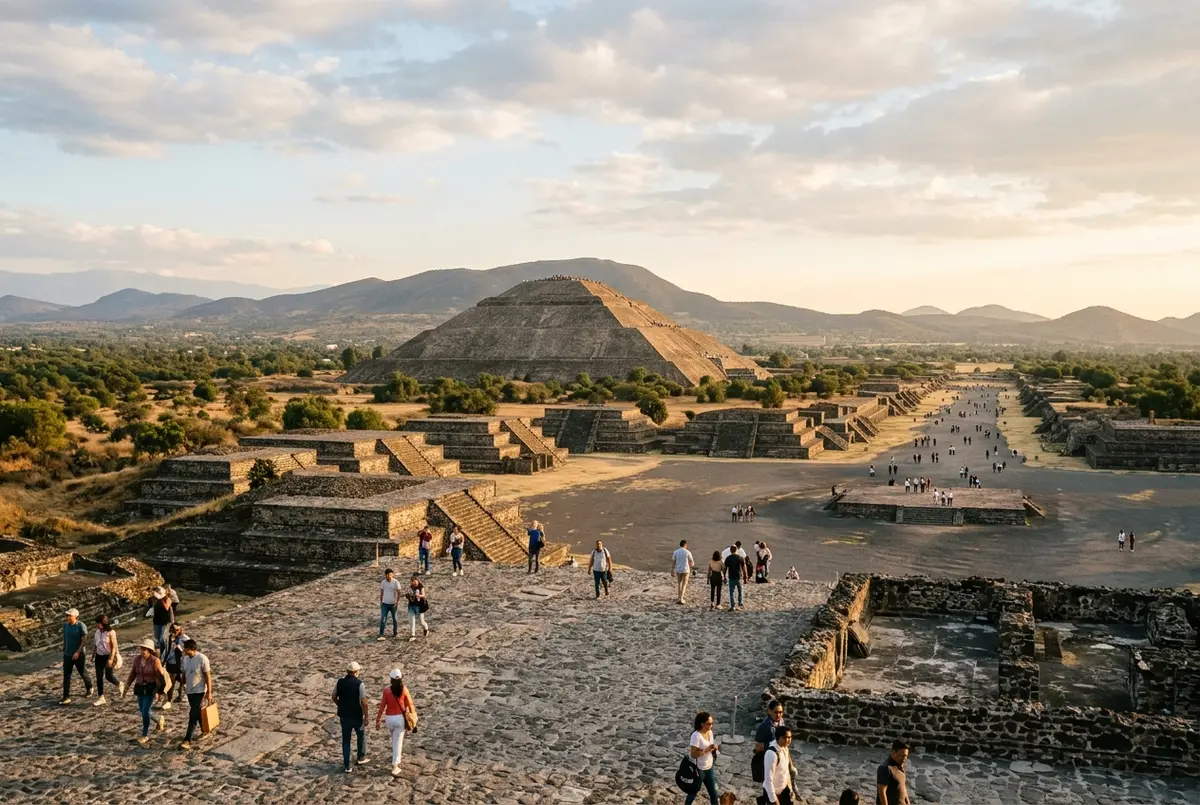
Teotihuacan was one of the largest cities in the ancient world, home to an estimated 100,000 to 200,000 people at its peak, roughly between 100 and 450 CE. Its ruins cover more than 20 square kilometers northeast of modern Mexico City, anchored by the Avenue of the Dead, a roughly two kilometer ceremonial road connecting the city’s largest monuments.
Who Built the Pyramids of Teotihuacan?
This is one of archaeology’s genuine open questions. The city predates the Aztecs by many centuries, and its original builders left no confirmed written language identifying themselves, so historians rely on the name the Aztecs later gave the abandoned ruins rather than what its own people called their home. Competing theories point to Totonac, Otomi, and early Nahua-speaking groups as possible builders, but no single answer is settled fact.
What Does the Name Teotihuacan Actually Mean?
Teotihuacan is a Nahuatl name given by the Aztecs centuries after the city’s decline, commonly translated as “the place where the gods were created” or “birthplace of the gods.” The Aztecs found the abandoned city so impressive that they believed it was where the sun and moon were created, and the name has stuck ever since, even though it is not what the original inhabitants called their own city.
When Was Teotihuacan Built and Occupied?
Construction of the major pyramids is generally dated to between roughly 100 and 250 CE, with the city reaching its peak population and influence between 250 and 450 CE. By around 550 CE, the city had gone into decline and was largely abandoned, centuries before the Aztecs rose to power in the same region.
Why Did Teotihuacan Decline?
Archaeologists still debate the exact cause, though evidence points to a combination of internal unrest, resource strain from supporting such a large population, and possibly drought or agricultural stress. Burn layers found at some ceremonial structures suggest deliberate destruction, hinting at an uprising against the ruling elite rather than a single external invasion.
How Many Pyramids Are There at Teotihuacan?
The site’s three headline monuments are the Pyramid of the Sun, the Pyramid of the Moon, and the Temple of the Feathered Serpent inside the Ciudadela complex, though dozens of smaller platforms and residential structures dot the site as well. Our full breakdown of how many pyramids are at Teotihuacan covers each structure and its scale in more detail.
How Big Is the Pyramid of the Sun?
The Pyramid of the Sun is the largest structure at Teotihuacan and the third largest pyramid in the world by base area, standing roughly 65 meters tall with a base measuring about 225 meters on each side. It was built in stages over multiple construction phases, with each layer added on top of earlier versions of the structure.
What Is Inside the Pyramid of the Sun?
Archaeologists have discovered a tunnel and chamber system beneath the Pyramid of the Sun, including a natural cave that may have held ritual significance for the city’s original builders, possibly tied to creation myths about the sun emerging from the underworld. Excavation of these underground spaces continues to this day, and new findings periodically reshape what historians understand about the structure’s original purpose.
How Does the Pyramid of the Moon Differ From the Pyramid of the Sun?
The Pyramid of the Moon sits at the northern end of the Avenue of the Dead, smaller than the Pyramid of the Sun but arguably offering better views back down the length of the site once you climb its accessible lower section. Our Pyramid of the Sun versus Pyramid of the Moon comparison breaks down the size, layout, and visitor experience differences between the two.
What Is the Temple of the Feathered Serpent?
The Temple of the Feathered Serpent sits inside the Ciudadela, a large sunken plaza near the site’s southern entrance, and is named for the carved serpent heads decorating its facade. Excavations beneath this temple have uncovered mass burials and rich offerings, suggesting it played a central role in the city’s religious and political life, possibly tied to ruler succession or major ceremonial events.
What Is the Avenue of the Dead?
The Avenue of the Dead is the roughly two kilometer ceremonial road running through the heart of Teotihuacan, connecting the Ciudadela at the south to the Pyramid of the Moon at the north, with the Pyramid of the Sun positioned partway along its length. The Aztecs gave it this name centuries later, mistaking the platforms lining the route for tombs, though most were actually ceremonial or residential in function.
Can You Climb the Pyramids at Teotihuacan?
Generally yes, climbing remains part of the standard visitor experience at both major pyramids, though access can occasionally close for maintenance or restoration work at specific structures. Our detailed guide on climbing the Teotihuacan pyramids covers current access rules and what to expect on the climb itself.
What Is the Palace of Quetzalpapalotl?
The Palace of Quetzalpapalotl sits near the Pyramid of the Moon and is one of the best preserved residential complexes on the site, with original murals, carved pillars, and courtyards still visible. It is believed to have housed high status residents, possibly priests or administrators tied to the temple complexes nearby, and offers a rare glimpse of daily elite life in the ancient city.
What Artifacts and Murals Have Been Found at Teotihuacan?
Archaeologists have recovered elaborate murals depicting deities, animals, and ritual scenes across multiple residential compounds, along with obsidian tools, ceramics, and jade objects that point to Teotihuacan’s role as a major trade hub across ancient Mesoamerica. Many of these finds are displayed in the on-site museum and in Mexico City’s National Museum of Anthropology.
Was Teotihuacan Connected to the Aztecs or the Maya?
Teotihuacan predates the Aztec Empire by many centuries and was already an abandoned ruin by the time the Aztecs rose to power, though the Aztecs revered it as a sacred site and gave it the name still used today. Evidence of contact and trade with the Maya civilization to the south has also been found at Teotihuacan, suggesting the city’s influence and reach extended well beyond central Mexico during its peak.
Is Teotihuacan a UNESCO World Heritage Site?
Yes, Teotihuacan was inscribed as a UNESCO World Heritage Site in 1987, recognized for its exceptional scale, urban planning, and influence on later Mesoamerican civilizations. This status reflects both the site’s historical importance and the ongoing effort to preserve it for future visitors and researchers.
How Big Was Teotihuacan at Its Peak?
At its height, Teotihuacan is estimated to have housed between 100,000 and 200,000 residents, making it one of the largest cities anywhere in the world at the time, rivaling contemporary cities in size across the ancient globe. Its urban layout, with residential compounds, workshops, and ceremonial architecture arranged around the central avenue, reflects a level of city planning that was remarkably advanced for its era.
Are Archaeologists Still Discovering New Things at Teotihuacan?
Yes, active excavation continues at Teotihuacan, including ongoing work beneath the Pyramid of the Sun and the Temple of the Feathered Serpent. New tunnel discoveries, burial sites, and artifacts are still being uncovered, meaning the historical picture of the city continues to shift as research progresses, even after more than a century of formal archaeological study.
What Should You Look For on a Visit to Understand the History?
Watch for the carved serpent heads at the Temple of the Feathered Serpent, the layered construction visible on parts of the Pyramid of the Sun, and the preserved murals inside the Palace of Quetzalpapalotl, each a physical clue to the city’s religious life, engineering, and daily routines. A guide can point out details that are easy to miss without context, since very little on-site signage explains the deeper history behind what you are looking at.
How Does Teotihuacan Compare to Other Ancient Pyramid Sites?
Teotihuacan’s Pyramid of the Sun ranks among the largest pyramids anywhere in the world by base area, comparable in scale to some of Egypt’s Giza pyramids, though built using a completely different construction method and civilization centuries apart. Unlike Egypt’s pyramids, which functioned primarily as tombs, Teotihuacan’s structures appear to have served ceremonial and civic purposes tied to the city’s religious and political life.
What Mysteries About Teotihuacan Remain Unsolved?
The identity of the city’s founding civilization, the exact purpose of many residential complexes, and the precise sequence of events behind its decline are all still actively debated among archaeologists. Even the pyramids’ full religious significance is understood only partially, pieced together from murals, burials, and comparisons with later Mesoamerican cultures rather than any surviving written record from the builders themselves.
Ready to See the Pyramids in Person?
Understanding the history behind Teotihuacan makes an in-person visit far more rewarding, since the carved details and layered construction become genuinely fascinating once you know what you are looking at. The Teotihuacan Early Access Tour pairs a bilingual guide with round-trip transport and entry, so you get the history explained on site rather than piecing it together afterward.
What are the main pyramids at Teotihuacan?
The Pyramid of the Sun, the Pyramid of the Moon, and the Temple of the Feathered Serpent are the three largest and most significant structures at the site.
Who built Teotihuacan?
The exact civilization behind Teotihuacan’s construction is still debated by historians, since the city predates the Aztecs and left no confirmed written records identifying its builders.
How old are the pyramids of Teotihuacan?
The major pyramids date to roughly 100 to 250 CE, making them close to 1,900 years old, with the city reaching its peak population between 250 and 450 CE.
Why did Teotihuacan decline and get abandoned?
Evidence points to a combination of internal unrest, resource strain, and possibly drought, with burn layers at some structures suggesting an uprising rather than a single outside invasion.
Is Teotihuacan older than the Aztec civilization?
Yes, Teotihuacan was already an abandoned ruin by the time the Aztec Empire rose to power, though the Aztecs revered the site and gave it the name still used today.